
Towards 2030 Without Poverty

Progress that is easy to miss
At the time of our 2015–2016 survey, extreme poverty had fallen by more than half since 1990. Yet 87% of people surveyed across 24 countries thought it had increased or stayed the same, and only 1% knew it had fallen by more than half. This gap between progress and public perception can make it harder to build momentum for further action.
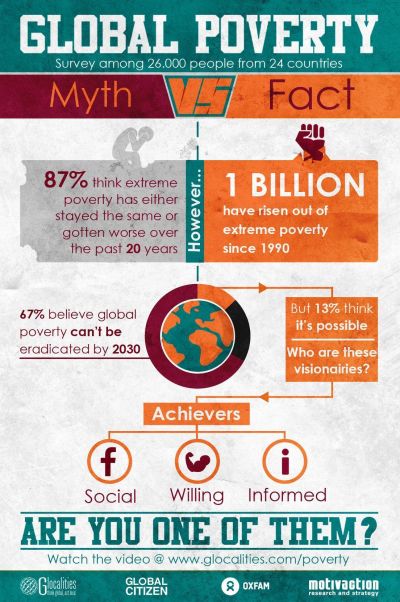
What do people know about the Global Goals?
We looked at what people knew about progress against extreme poverty and the Sustainable Development Goals, which goals they prioritised, and whether they believed global poverty could be ended by 2030. We also asked what difference they thought their own actions could make.
Who is ready to get involved?
Looking beyond demographics, we identified two potential frontrunner groups: the visionaries, who believe poverty can be eradicated by 2030, and the involved optimists, who believe their actions can make a difference. Their values and motivations offer different entry points for engaging people.
Different motivations, shared direction
People working in the charitable and nonprofit sector, visionaries and involved optimists may approach change in different ways. We explore where their motivations differ and where their shared desire to improve lives can provide common ground for collaboration.
Building engagement that resonates
We combine values-based audience profiles with insights into lifestyles, media use and storytelling archetypes to explore how the Global Goals community can reach and involve more people. Download the full report for the detailed profiles and engagement recommendations.
Full report
Towards 2030 Without Poverty
Cite this report

You might also find these reports interesting

The Flourishing Fabric


